


Author: Chad Cook, Creative Strategist,
Fundraising Professional
The Leading Fundraiser to raise more money in the least amount of time. Trusted by High Schools & Colleges Nationwide since 2010.
Details
Read Time: 14 min
Published: 5/1/2026
Categories
Team Fundraiser
Athletic Department Software
School-Wide Fundraising
Crowdfunding Solution
How to Build a Donor Pipeline That
Grows Year Over Year
Every college athletic program runs events. Golf tournaments, homecoming weekends, alumni nights. Chances are your campus has been doing some version of these for years. But here’s the uncomfortable question: are those events actually building anything, or are you starting from scratch every single year?
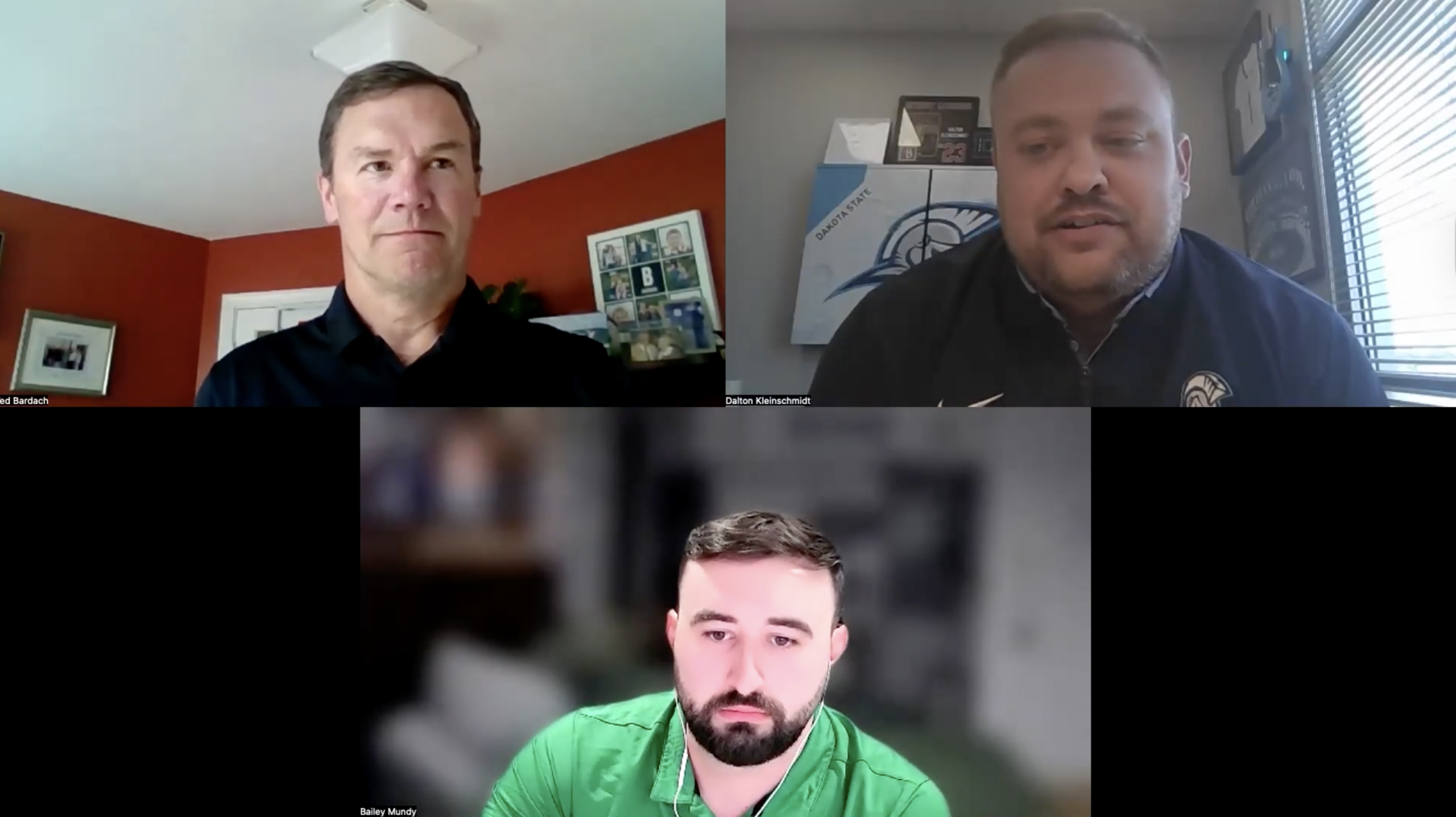
That was the central challenge tackled in our recent webinar, Building a Donor Pipeline Through Peer-to-Peer Campaigns and Events. Dalton Kleinschmidt, Annual Giving Officer at Dakota State University, and Bailey Mundy, Enterprise Account Executive at eTeamSponsor, joined Ted Yoder, Director of Revenue for the Eastern Region, to share what’s actually working at high-performing programs and how you can apply those lessons on your own campus.
Here’s what we took away.
Dalton Kleinschmidt, Dakota State University
“If you can make somebody feel like they’re not just a dollar amount, you’ve built something,”
The Problem: Great Events, Stagnant Pipelines
Running a successful fundraising event feels like a win. And it is, in the moment. But if your donor list looks the same three years in a row, the event is generating revenue without generating momentum.
“Lots of campuses run events every year,” Ted noted at the open of the webinar. “But every year you’re kind of starting from scratch from your pipeline standpoint.”
The goal isn’t just to raise money at this year’s event. It’s to build a compounding base of relationships so that next year’s event raises more, and the year after that raises more still. That shift in thinking — moving from event-as-transaction to event-as-relationship-builder — is what separates programs that plateau from programs that grow.
Lesson 1: Cast a Wider Net Than Athletics
Dalton’s first piece of advice sounds obvious until you realize how rarely it’s practiced: not everyone on your campus or in your donor base cares about sports.
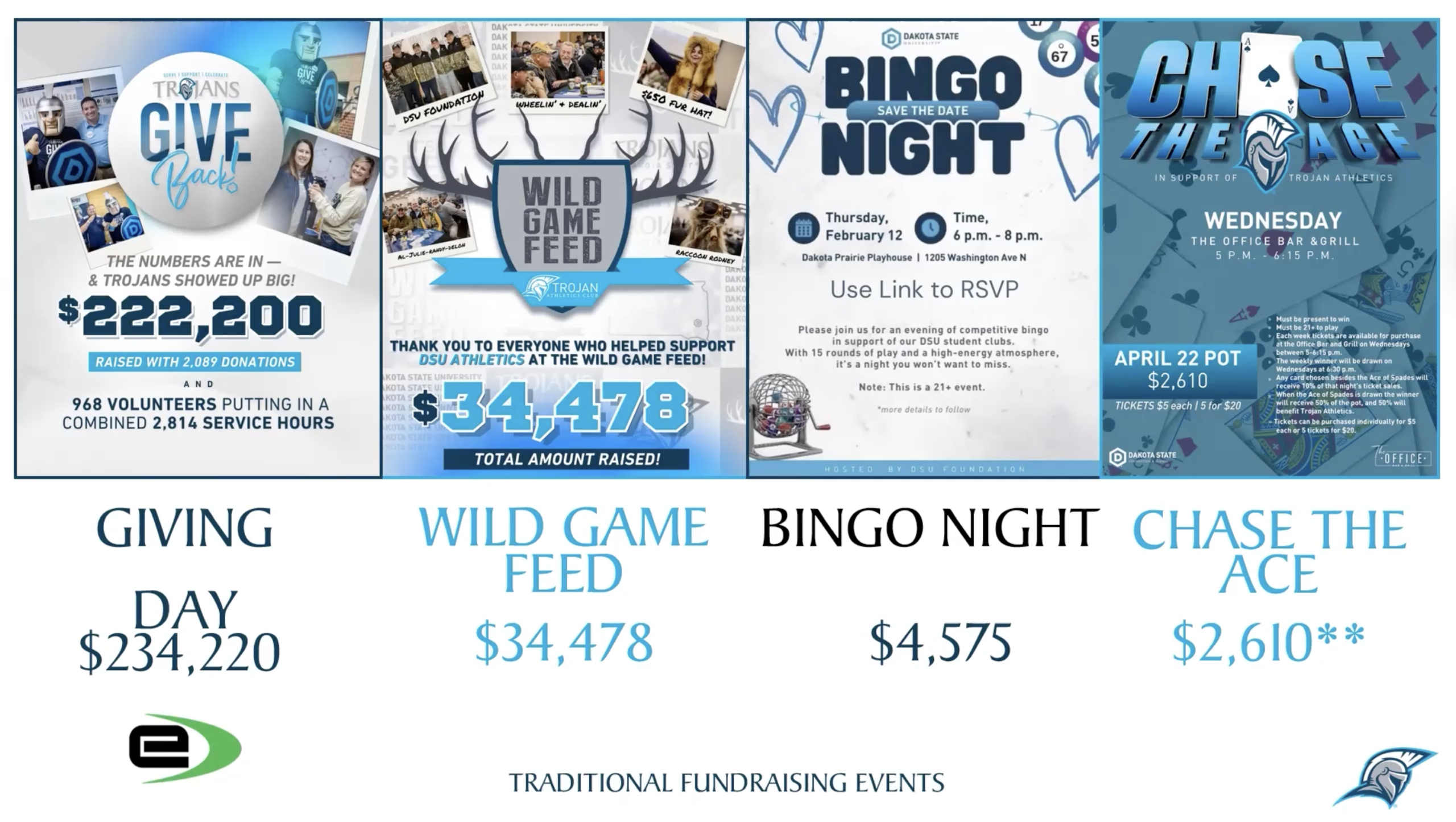
At Dakota State, the team has made it a priority to design events that pull in donors who wouldn’t otherwise show up for an athletic fundraiser. Their Wild Game Feed is the clearest example. Think camouflage vests, a dozen cuts of wild game, cold drinks, and a live auction featuring gun safes and smokers, all held inside what they call “the Playhouse.”
The result? Just over $34,000 netted after expenses, all because they asked a simple question: What do our donors actually enjoy?
“You can’t put everybody in one box and expect that to work,” Dalton said. “We try our best to spread these events out to fit the different people in our region.”
Other events in Dakota State’s calendar include:
- Bingo Night: A low-cost kickoff event that brought in $5,100 from faculty and staff in a 90-minute window, fueled by the promise of donuts for every contributor
- Chase the Ace: A raffle-style bar event popular in the Midwest that engages community members outside the traditional athletic donor base
- Downtown Madtown Dunk Tank: A summer street event where alumni paid for the chance to dunk coaches and faculty, generating cash donations and significant buzz
The variety isn’t random. It’s strategic. Each event is designed to reach a different segment of potential donors, and the cumulative effect is a much wider top of the funnel.
Lesson 2: Peer-to-Peer Campaigns Are Your New Donor Engine
Events get people in the door. Peer-to-peer campaigns get people into your database.
Bailey broke down why peer-to-peer is such a powerful tool for building a pipeline, and it’s not just about the dollars raised in-campaign.
“We’re averaging about 1,000 net new donors a year per school,” she said. “Not only are you getting 1,000 new people, but you’re getting updated contact information, including addresses, emails, and phone numbers, that you couldn’t purchase or figure out any other way.”
For advancement offices that struggle with outdated alumni records, that’s a meaningful side benefit. A $5 donation from a soccer fan who follows the team on Instagram is also a self-reported address update, a verified email, and a warm introduction to your program.
But the real power of peer-to-peer is network access. When athletes reach out to their own contacts, including high school coaches, grandparents, and former teammates, they’re tapping relationships your advancement office has no visibility into. One of Dalton’s best examples: a baseball dad from California who watched the live scoreboard during a campaign training night, made a $5,000 gift on the spot, and was subsequently converted into a $350,000 locker room renovation after a follow-up call from Dakota State’s senior foundation director.
That gift didn’t happen because of a cold outreach. It happened because a peer-to-peer campaign put a donor in the room (virtually), and a sharp advancement team was watching.
Lesson 3: Buy-In Has to Come from the Top Down
Bailey was direct about what separates programs that get big results from peer-to-peer and those that don’t: participation.
“All of the clients that are the happiest with the service and have gotten the biggest return would say participation or buy-in is the biggest piece,” she said.
And buy-in isn’t just athlete participation. It’s a chain that starts at the administration level and flows through coaches to players to donors.
Here’s what that looks like in practice:
- Administration commits to the campaign and communicates that commitment to coaches
- Coaches set expectations with their players: this is what we’re doing, this is why, this is how
- Players share the campaign with their personal networks, not as a generic fundraising ask but as an authentic connection to something they care about
The ask itself matters too. Dalton pointed out that when programs are specific about what the money is for, like “we need to get out of this fieldhouse, we’re sharing a locker room with track and field,” donors respond differently than when they see a generic campaign goal. Specificity creates urgency and trust.
And the workload on athletes? Lower than most coaches expect.
“It takes the kids realistically 20 to 30 minutes,” Bailey said. “Twenty-plus emails, sharing to family members, texting it out, putting it on social media. That sounds like a lot at first, but that’s it.”
Lesson 4: Think About the Full Donor Journey, Not Just the Gift
One of the most valuable frameworks to come out of the conversation was the idea of graduating donors from one level of engagement to the next.
Bailey described it this way: a grandparent who donates to the baseball team because their grandson plays isn’t a baseball donor forever. They’re a future university donor, if you steward them well.
The journey looks something like this:
Initial gift (peer-to-peer) → Event attendance → Program affinity → Institutional loyalty → Major gift potential
Each step requires intentional follow-up. Use the event to show donors what their money accomplished. Send the photo of the new scoreboard. Show the team in the new uniforms. Invite them to the game and give them a moment to feel connected.
“People want to be a part of something,” Bailey said. “When those kids care about what’s going on in the program, that’s reflected to the donors.”
Dalton added a point about gratitude that doesn’t get enough attention: your thank-you matters. eTeamSponsor sends a platform-generated acknowledgment, but he encouraged programs to go further with a handwritten note, a personal call, or anything that tells a donor they’re more than a transaction.
“If you can make somebody feel like they’re not just a dollar amount, you’ve built something,” he said.
Lesson 5: Measure ROI Before You Scale
Dalton has run more than 60 events in a single year at Dakota State, and he’s candid that not all of them are worth repeating.
“We try our hardest not to ever put ourselves in the red,” he said. “As long as you’re not going in the hole, give it a try. But do you want to put two to three weeks into a project and only make a thousand bucks? That’s not really efficient for time.”
A few practical filters they use before committing to an event:
- Will it move the needle? If the time investment doesn’t produce meaningful revenue or relationship-building, reconsider
- Can we partner with a local sponsor to offset costs? Dakota State has built relationships with businesses that align naturally with their events, including outdoor retailers for the Wild Game Feed and regional businesses for the Pentagon Series sponsorship
- Does it reach a different audience? If two events draw the same donor pool, one of them may be redundant
Their club giving day is a good example of this mindset in action. Year one results were modest, but the feedback was positive, the costs were covered, and the platform now has credibility with student organization leaders. They’ll build on it.
Putting It All Together
The summary Ted offered near the close of the webinar is worth repeating:
Peer-to-peer campaigns bring in new donors. Events turn those donors into supporters. And follow-up turns those supporters into long-term relationships.
That’s the pipeline. It’s not complicated, but it requires each piece to work together, and it requires consistency across years, not just a great single event.
If your program is running events without a deliberate strategy for capturing, stewarding, and graduating the donors who show up, you’re leaving significant long-term value on the table.
Watch the Full Webinar
Want to hear Dalton walk through Dakota State’s events calendar in detail, or get Bailey’s breakdown of peer-to-peer best practices from across eTeamSponsor’s client base?
Watch the full webinar recording and access the resource library here →
And if you’re ready to talk about how eTeamSponsor can help connect your events, your peer-to-peer campaigns, and your advancement pipeline into a single revenue-building system, book a time with our team. We’d love to show you what’s possible.
Dordt University Case Study
Dordt University sought a streamlined and effective way to fundraise for its athletic teams and student programs.
Clarke University Case Study
Clarke’s fundraising system required extensive setup, manual updates, and regular training—placing a strain on a small advancement team.
USUE University Case Study
USUE needed a fundraising platform that matched their pace and purpose. Since partnering with eTeamSponsor, USUE has raised $309,914.
GET STARTED FUNDRAISING
Demonstration Request
Enter your information to be contacted by our team and start earning 2-4X more for your foundation.